 English
 Español

DetailsVideo
Product Details:
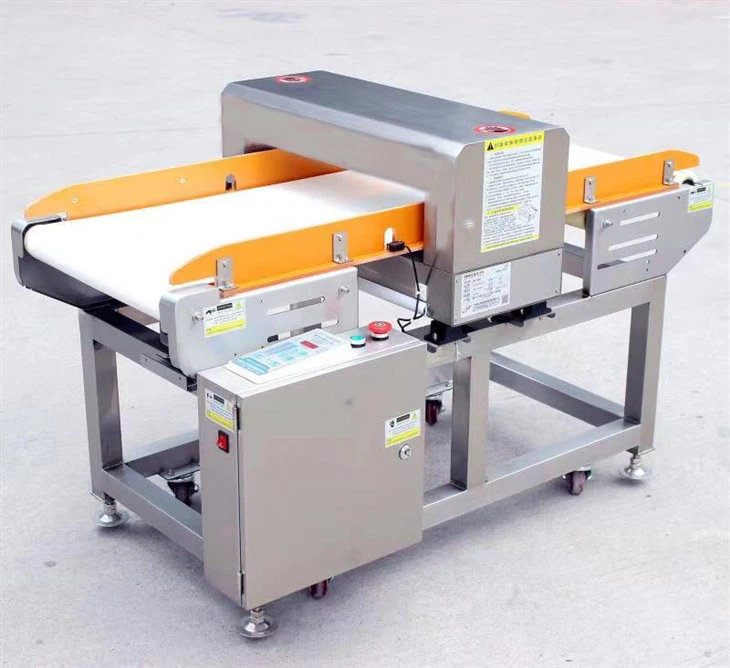
conveyor metal detector has become an essential requirement in several industries, especially in industries such as food, pharmaceuticals, and mining. The conveyor metal detector used in these industries must be precise, consistent, and designed to detect all types of metal. The food conveyor metal detector is a digital belt that uses advanced technology to detect metal contaminants in food products, pharmaceuticals and other industrial products.
Features:
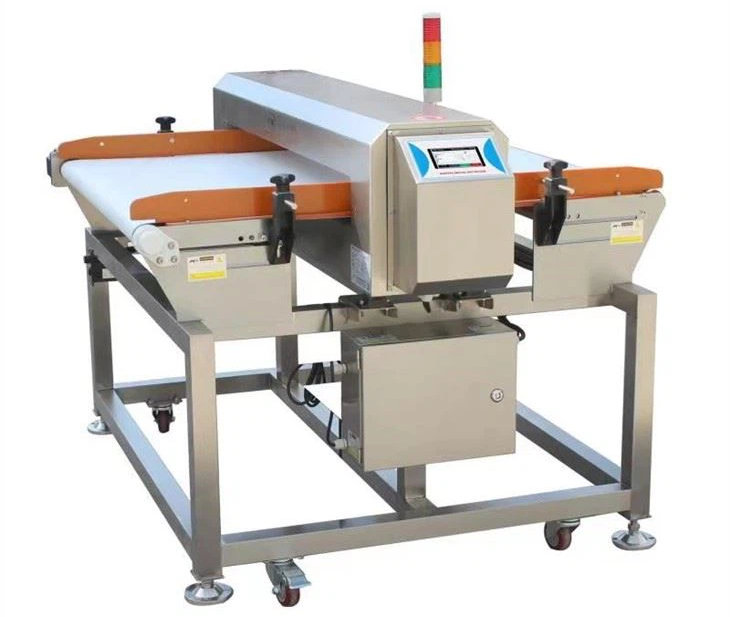
The conveyor metal detector uses advanced technology for digital signal processing, ensuring that the signal remains consistent and robust in the presence of external interference. This allows for accurate detection with minimal false alarms, reducing the risk of product contamination and rework.
food conveyor metal detector can detect all metal types, including copper, aluminum, iron, tin, stainless steel, and other metals. The automated parameter detection system allows for versatile detection setting, enabling multiple product configurations with a single device.
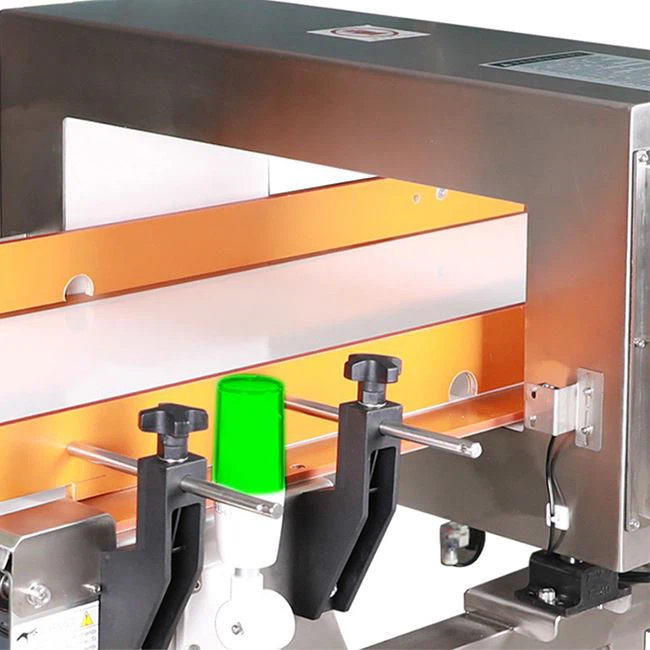
Conveyor type metal detector features a balanced coil system that eliminates detection blind spots, allowing for identification of any metal contaminants as they pass through the detection window.
The user-friendly interface means that it is easy to operate and allows for quick and easy parameter setting. The liquid crystal display interface is interactive and makes it simple to change parameters without the need for expert training.
Additionally, the device has an extensive memory to store up to 12 individual product settings to allow simple configuration changes for specific products. The Belt Metal Detector is made of high-grade 304 stainless steel, making it waterproof, moisture-proof, corrosion-resistant, and easy to clean.
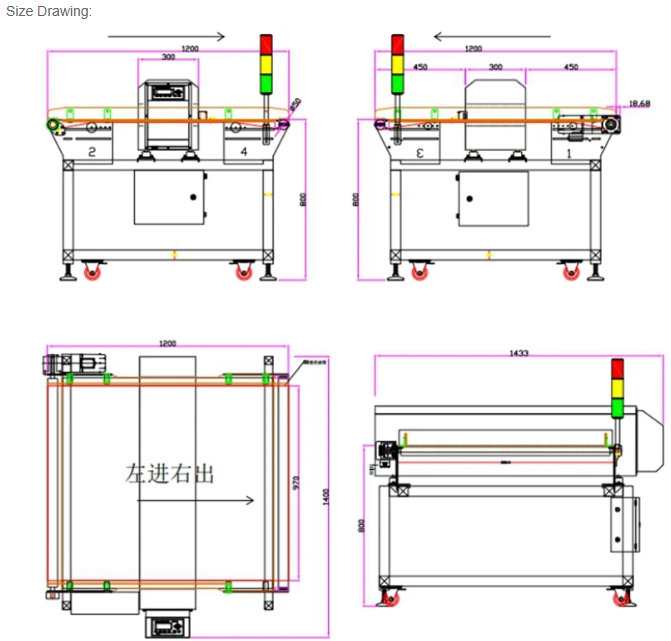
Parameters(tunnel can be customized according to your product size and weight.)
Model: 3010
Passage height:10cm
Power supply: single phase, 220V, 50 HZ(standard) or as your required
Preset Number: 1-100 items
Operating temperature: 0℃~50℃
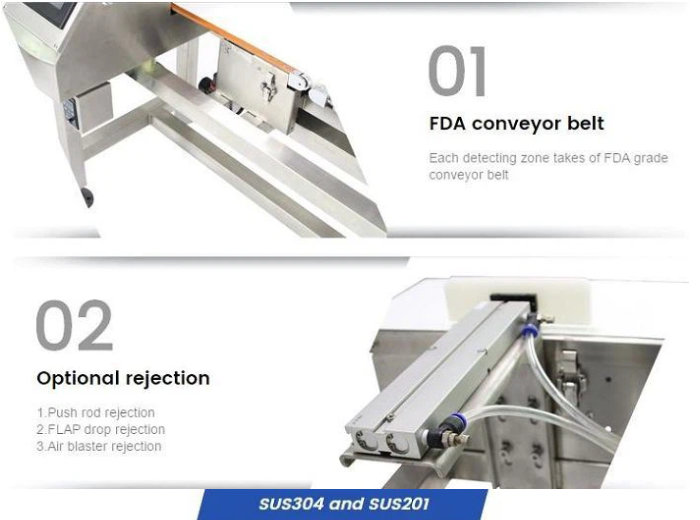
Standard reject system: Belt stop,audible alarm
Speed: 10-40m/min adjustable
Flow direction: from left to right(face to the screen) or as required.
Whole conveyor length: 1500mm or customize
Conveyor to ground height: 700mm, +50mm or customized
Applicable industries:
Food, medicine, toys, clothing, footwear, chemicals, leather, knitting and other industry products, used to detect metal impurities mixed in products or raw materials during production and processing. Such as: iron and non-ferromagnetic metal objects (common metals such as iron, copper, aluminum, stainless steel, etc. can be detected)

Why choose us:
Warranty Notes Notes:
Our food conveyor metal detector have 2 year warranty.
If the company judges that it is due to the following factors and does not belong to the scope of free warranty services, the company will have the right to charge maintenance fees:
A. Exceeding the validity period of the warranty provided by Donggguan bestar.
B. Damage caused by irresistible external force (such as: flood, fire, earthquake, lightning strike, typhoon, etc.) or improper human operation and use;
C. The user or asks a third party to repair, refit, change the components, modify the circuit, etc. without authorization;
D. Altering the warranty service sheet or inconsistent with the product;
※ The conveyor belt is not covered by the warranty; the export is not guaranteed.
FQA:
If you are working in an industry that deals with food processing or packaging, then you must be familiar with the importance of a conveyor metal detector. In this blog, we will answer some frequently asked questions (FQA) about food conveyor metal detectors.
1. What is a conveyor metal detector for food?
A industial metal detector conveyor is an electronic device that is used to detect the presence of metal contaminants in food or other materials during the processing or packaging stage. It is installed on the conveyor belt and is capable of detecting all types of magnetic and non-magnetic metals.
2. How does a work?
A metal detector in conveyor belt works by emitting an electromagnetic field around the conveyor belt. When metal particles pass through this field, they disrupt the field and trigger an alarm to alert the operator. The operator can then stop the conveyor belt and remove the contaminated material.
3. What are the benefits of using a conveyor metal detector?
The benefits of using food conveyor metal detector are numerous. It ensures that all products are free from metal contamination, which could potentially harm the end-user. It also reduces the risk of product recalls, which can be costly and damaging to a company's reputation.
4. What are the different types of metal detector belt conveyor system available?
There are two main types of conveyor metal detectors available - the balanced coil system and the pulse induction system. The balanced coil system is the most common type and is suitable for detecting ferrous and non-ferrous metals. The pulse induction system is more sensitive and can detect smaller particles of metal.
5. How often should a conveyor metal detector be calibrated?
A conveyor metal detector should be calibrated regularly to ensure accurate detection. The frequency of calibration depends on various factors, such as the type of product being processed, the level of metal contamination in the environment, and the manufacturer's recommendations. Typically, calibration should be carried out every six or twelve months.